Fine Lines
About 51 min read
Distinctions, Thresholds, and the Boundaries We Live Across
Stuart Hollinger
Working Book 0.2 - September 2026
New reflections, 9 September 2026: Contemplative distance and love · The traffic encounter.
A distinction can be true without exhausting Reality.
Before the Line
I keep noticing that human experience does not only contain things. It contains transitions. Something can be good until it becomes too much. Something can look identical from the outside while being completely different from the inside. A helpful idea can become an escape from life. Strength can become domination. Care can become control. Confidence can become arrogance. Reflection can illuminate participation and then, almost invisibly, begin replacing it.
Those transitions are what I mean by Fine Lines. The phrase is not a claim that every important distinction has one exact mathematical boundary. Sometimes a line is sharp. Sometimes it is a region. Sometimes the line moves with context. Sometimes the line is functional: something actually changes in the way a person or System operates. Sometimes it is decisional: we choose to classify or respond differently. Sometimes it is normative: we claim that one side should be treated as better, worse, permissible, dangerous, loving, unjust, sacred, or destructive.
The point of this book is not to turn life into endless boundary analysis. That would immediately create another Fine Line: seeing the line versus living at the expense of living. The goal is to make distinctions visible where collapsing them causes confusion, harm, or bad judgment, and then to return to the actual Moment.
| The central intuition A Fine Line matters when something consequential changes across it - even if the outward appearance does not. |
|---|
This book grew beside the Existential Matrix, but it is not merely a chapter of that framework. The Matrix provides useful language for participant, Moment, System, manifestation, representation, orientation, Action Horizon, and becoming. Fine Lines asks a more specific question: where do related things stop being the same kind of thing for the purpose that matters?
The answer is rarely 'always at the midpoint.' Human beings live across thresholds whose location depends on bodies, histories, relationships, purposes, power, truth, and context. That complexity should not make us abandon distinctions. It should make us draw them more carefully.
Contents
PART I - WHAT A FINE LINE IS
2. True Without Being Exhaustive
PART II - THE FINE LINE OF HUMAN EXPERIENCE
6. Reflection and Participation
PART III - SELF AND OTHER
PART IV - WILL, POWER, AND BECOMING
PART V - THE MORAL FIELD
20. Good, Evil, and Beyond the Box
PART VI - THE MATRIX AT THE LINE
25. Real Possibility and Imagined Possibility
PART I
What a Fine Line Is
A boundary is not useful because it is neat. It is useful because something changes across it.
CHAPTER 1
The Line
We often notice the line only after we have crossed it.
A Fine Line is a transition inside a field of related possibilities. The two sides are close enough to be confused and different enough that the confusion matters. That is why the line feels fine. If two things had nothing in common, we would rarely need a subtle boundary. We need Fine Lines precisely where similarity hides consequence.
Confidence and arrogance can share posture, tone, decisiveness, and social boldness. Discipline and compulsion can share schedules, repetition, sacrifice, and discomfort. Care and control can share constant attention to another person. Patience and avoidance can both look like waiting. Courage and recklessness can both look like moving toward danger. The outside form is therefore not sufficient.
To locate a line, we have to ask what changes. Does the action stop serving the purpose that originally justified it? Does flexibility disappear? Does the other person become an instrument? Does the person lose the capacity to stop? Does truth become subordinated to identity? Does reflection stop returning to action? A useful Fine Line has a criterion of consequence.
| A first test Do not ask only, "What does this look like?" Ask, "What function has changed, what relation has changed, or what good is now being served differently?" |
|---|
This is also why Fine Lines should not become labels thrown at people. Saying 'you crossed the line' can hide the actual reasoning. A better statement is: this changed here, and that change matters for this reason. The book repeatedly returns to that discipline. The line is not the accusation. The line is the transition we are trying to see.
CHAPTER 2
True Without Being Exhaustive
A real distinction can occupy only one dimension of a larger Reality.
One of the deepest intuitions behind Fine Lines is that partial truth is not the same as falsehood. A moral distinction can be real without exhausting a person. A psychological label can identify something important without becoming the whole explanation. A worldview can illuminate one structure without enclosing Reality.
Imagine a white region marked good and a black region marked evil. If goodness and evil are real, the distinction matters. But Reality may still contain dimensions that are not exhausted by asking whether the thing belongs in the white or black region. The existence of a real moral dimension does not imply that every truth is only a moral classification.
This becomes especially important with people. A person can do something genuinely wrong. The wrongness should not be dissolved in vague complexity. Yet the person is still more than the sentence describing that wrong act. They contain history, body, relationships, capacity, ignorance, intention, possibility, pain, responsibility, and future becoming. To recognize the larger field is not to erase the judgment. It is to refuse reduction.
Fine Lines therefore protects two movements at once: enter the distinction and do not become imprisoned by the distinction. The first prevents relativism. The second prevents totalization.
| A recurring principle Seeing beyond a distinction does not make the distinction false. It shows that a true distinction can still be non-exhaustive. |
|---|
CHAPTER 3
Functional, Decisional, and Normative Lines
Not every boundary is the same kind of boundary.
A great deal of confusion comes from treating every line as though it has the same source. Fine Lines separates at least three kinds.
A functional line is crossed when something actually changes in operation. A training routine may remain demanding yet adaptive until recovery fails and performance begins deteriorating. A relationship may remain protective until monitoring destroys autonomy. A debate may remain truth-seeking until winning becomes the governing objective. The line is tied to a change in function.
A decisional line is where a participant or institution chooses to classify or respond differently. A doctor chooses a threshold for intervention. A court chooses a legal standard. A person decides, 'If this happens again, I leave.' The line may be wise or foolish, but its immediate existence comes from a criterion used for action.
A normative line is where we claim that one side ought to be treated differently. This is the line between permissible and impermissible, faithful and unfaithful, just and unjust, loving and exploitative. Normative lines require a moral ground; geometry alone cannot generate an ought.
The three can overlap. A functional deterioration may justify a decisional threshold which is then defended normatively. But they can also diverge. A legal threshold can be crossed before the underlying function changes. A moral wrong can exist before measurable harm appears. A functional transition can occur without moral blame.
| Why the distinction matters If you do not know what kind of line you are drawing, you will argue about the wrong thing. |
|---|
CHAPTER 4
Context Moves the Boundary
The same act can occupy a different position because the surrounding field changed.
Fine Lines are often context-sensitive without being arbitrary. A volume level that is appropriate at a concert is inappropriate beside a sleeping infant. A level of risk that is reasonable for an experienced climber can be reckless for a beginner. A blunt statement that is loving in one relationship can be humiliating in another because power, history, trust, timing, and vulnerability differ.
Context changes what an act does. That is different from saying context magically turns everything into anything. The line moves because relevant variables move. The challenge is to identify which variables genuinely matter rather than using 'context' as permission to avoid judgment.
The Existential Matrix helps here because a Moment includes more than the visible action. The participant arrives with a body, memory, orientation, history, and Action Horizon inside a System already structured by other people and prior events. The same outward act can therefore have different functions across Moments.
Fine-Line reasoning should ask: What remained constant? What changed? Which change alters the meaning, consequence, or moral character of the act? If we cannot answer that, 'it depends on context' is only fog.
| A boundary can move without disappearing Context-sensitive does not mean meaningless. It means the criterion must travel with the variables that make the distinction consequential. |
|---|
PART II
The Fine Line of Human Experience
Human beings can represent their own participation. That power can illuminate life or become a substitute for life.
CHAPTER 5
Seeing and Living
The observer in us can become so active that the participant disappears behind it.
One of the clearest Fine Lines in this entire project came from a simple intuition: seeing it and talking about it / understanding it versus doing it. Human beings can step outside an experience conceptually while still being inside it existentially. We can love and think about love, pray and analyze prayer, train and evaluate training, grieve and observe ourselves grieving.
This second-order capacity is extraordinary. It allows learning, correction, planning, science, confession, art, and philosophy. But it introduces a danger: the representation of participation can become more psychologically rewarding than participation itself. We can feel progress because the explanation became sophisticated while the action did not change.
A person can understand patience while remaining impatient, describe forgiveness while rehearsing resentment, explain attentiveness while looking through the person in front of them, or discuss God for hours while avoiding the concrete demand of love. The conceptual world is not false; it is simply not the act.
The Fine Line is crossed when reflection ceases to serve return. Seeing should eventually return the participant to the Moment with a truer representation, a wider Action Horizon, a more faithful orientation, or a better act. When seeing loops only into more seeing, the observer has begun replacing the participant.
| The line of human experience Reflection is healthy when it illuminates participation. It becomes avoidance when maintaining the reflection replaces the participation it was meant to serve. |
|---|
CHAPTER 6
Reflection and Participation
The map should disappear into the background when the Moment asks for action.
Reflection and participation are not enemies. Their healthy relation is recursive: experience gives reflection something real to work on; reflection changes what the participant can see; the changed participant returns to experience; consequences generate new reflection.
A useful loop looks like: experience -> reflection -> discernment -> action -> experience. An unhealthy loop can become: experience -> reflection -> reflection -> reflection. The person may become increasingly articulate while increasingly absent.
The difficulty is that endless reflection often feels responsible. 'I am trying to understand before I act.' Sometimes that is wise. Sometimes it is fear wearing the clothes of wisdom. The Fine Line cannot be located by the quantity of thought alone. We have to ask whether additional thought is still changing the decision-relevant picture.
A practical criterion is diminishing return. If another hour of analysis is not changing what is known, what is possible, or what is morally relevant, but is delaying an action whose basic character is already clear, reflection may have crossed into avoidance. The line is even clearer when the action is simple and relational: listen, apologize, stop, speak honestly, help, rest, show up.
The Matrix itself is subject to this line. A person should never need to calculate their Four Affections before comforting a crying person. The framework earns its place when it clarifies confusion and then gets out of the way.
| A practical question Is this reflection still changing what faithful participation requires, or is it now protecting me from participating? |
|---|
CHAPTER 7
Awareness and Self-Surveillance
Consciousness can open the Moment or turn the self into an object under constant inspection.
Awareness is often treated as automatically good. But awareness also has a Fine Line. There is a difference between being present to what is happening and continuously monitoring oneself as though one were a performance to manage.
Healthy awareness can widen contact with Reality. It notices breath, tension, the other person's face, the room, the impulse to interrupt, the possibility of a different response. Self-surveillance narrows attention back onto the self-image: How do I look? Am I being spiritual enough? Am I appearing confident? Did I respond correctly? What does this say about me?
Both states involve attention to oneself, so the outward difference may be invisible. The functional difference is where attention returns. Awareness returns information to participation. Surveillance recruits participation into maintaining a representation of the self.
This line matters spiritually as well. A person can become so concerned with whether they are loving, humble, pure, surrendered, or close to God that the represented spiritual self becomes the object of devotion. The concern may have begun sincerely. The Fine Line appears when the person in front of them becomes secondary to the management of their own spiritual image.
| The direction of attention Awareness asks, "What is here?" Self-surveillance asks, "What does what is here say about me?" |
|---|
Contemplative Distance and the Love Behind Inquiry
There is a further distinction here that I want to preserve. When I ask what I was sensitive to, and why that sensitivity interests me, my inquiry can sound like a concern about whether I am positioned properly. That was a phrase I reached for while trying to describe something not yet clear. It does not adequately name the purpose of the inquiry. The foundation, as I understand it, is a love for God and an interest in these questions themselves.
My experience gives me something concrete to examine. I can describe what happened, what I noticed, and what remains difficult to explain. Attention to that experience need not make my own condition the final object of concern. I may be looking through an ordinary encounter toward a question about God, another subject, responsibility, or the way a Moment unfolds. The subject being examined and the love that motivates the examination belong to different levels of the account.
This also separates the motives present during an event from my reason for studying it afterward. I can be uncertain about why I reacted to another driver while being clearer that love for God motivates my later inquiry. Neither answer supplies the other automatically. My reason for contemplating the encounter does not certify the action, and an unsettled reaction does not settle the purpose of my contemplation.
I seem to hold the experience at a slight distance. Distended is a word I reach for: there is enough room around it to pose it as a question, hear another reading, and return to it later. This is a description of how I am trying to attend. I remain the person who participated, while allowing the experience to become something I can revisit without immediately forcing a conclusion from it.
The distance may have a use that only becomes visible in hindsight. A later encounter might reveal a distinction that this one cannot yet make clear. Several accounts might show when a sensitivity appears, how its object changes, or why one explanation fits some Moments and fails in others. There is no guarantee that the records will yield a single theory. Their possible value is that I do not have to rebuild the earlier experience entirely from the concerns of a later day.
A useful record would keep the account of the event, the reported feeling, the question it raised, and the interpretation offered about it distinguishable. It should also retain uncertainties and later corrections. What I saw the other person do belongs to the record differently from what I imagined they thought. What I felt belongs differently from an explanation of why I felt it. A clarification of my purpose should remain visible when an earlier interpretation misdescribed it.
This makes the conversation part of the material. An interpretation can be articulate and still fail to describe the subject's intention. If I say that an inquiry is rooted in love for God, reducing it immediately to a wish for reassurance would lose something the inquiry was meant to preserve. My clarification helps correct the account while leaving the original event open to further examination.
Contemplation can also matter before a practical application appears. Loving attention, wonder, and the desire to understand may belong to the life being lived. The earlier distinction between awareness and self-surveillance therefore needs this qualification: reflection does not become self-surveillance simply because it examines the self or continues without an immediate outward result. Its purpose and manner of attention matter. Returning to participation can include continuing a patient inquiry, as well as making a concrete change when one is called for.
Read the traffic encounter · Continue in God’s Grace
CHAPTER 8
Knowing and Being Formed
Possessing the concept of a virtue is not the same as acquiring the capacity to embody it.
Knowledge can change action, but knowledge and formation are not identical. Formation concerns what becomes easier, more available, more stable, and more natural through repeated participation. A person can know exactly how courage works while remaining unable to tolerate the bodily state that courage requires.
This distinction protects us from intellectual moralism. More correct concepts do not automatically produce a better person. At the same time, formation without reflection can become blind repetition. The healthy relation is again recursive: knowledge guides practice; practice exposes false knowledge; consequences refine understanding; repeated action changes capacity.
The Fine Line appears when knowing becomes a proxy score for being. This is common in moral, political, religious, and therapeutic cultures. The participant learns the language that signals insight and begins confusing fluency with transformation. The vocabulary may become exceptionally sophisticated while the same relational patterns continue.
A formation question cuts through this: What am I now more capable of doing because of what I claim to know? Not perfectly. Not once. But as a trajectory. Has the knowledge made truth easier to face? Has it widened patience? Has it increased the ability to repair? Has it made another person's reality easier to receive without immediate defense?
| Concept versus capacity Understanding names the pattern. Formation changes the participant who will meet the next Moment. |
|---|
PART III
Self and Other
Many interpersonal failures begin when a useful representation silently becomes the person.
CHAPTER 9
The Person and the Picture
The Other is always more than the model through which they reach you.
Another person never arrives in your consciousness as their entire being. They arrive through manifestations: words, expressions, actions, reputation, memory, messages, body language, shared history. You form a representation. That representation may be careful, accurate, loving, distorted, hostile, or incomplete. It can never literally become the other Subject.
The Fine Line is not between knowing nothing and knowing everything. Human relationships require models of one another. The line is between using a representation and collapsing the person into the representation.
The collapse is visible in sentences such as 'you are selfish,' 'you are crazy,' 'you do not care,' or even 'I know exactly how you feel.' Sometimes the judgment points to a real pattern. The problem begins when the pattern is treated as exhaustive and correction becomes impossible.
Allowing the Other to exceed the picture creates epistemic room. It does not require passivity or endless benefit of the doubt. You can maintain a boundary while admitting that your model is partial. You can condemn an act without claiming possession of the whole person. You can be highly confident while leaving a door open to evidence.
| Interpersonal humility The Other exceeds my representation of the Other - even when my representation contains something true. |
|---|
CHAPTER 10
Empathy and Projection
Feeling another person strongly can still be a way of feeling yourself.
Empathy is often praised as though intensity guaranteed understanding. It does not. A person can resonate powerfully with another and still be wrong about what the other is experiencing. The feeling may be genuine while the attribution is mistaken.
Projection occurs when material from my own configuration is treated as information about yours. I remember abandonment, so I assume your silence means abandonment. I would feel insulted, so I decide you must feel insulted. I am anxious, so your neutral face appears threatening. The other person becomes a screen on which my nervous system reads itself.
Empathy crosses toward projection when responsiveness stops being correctable by the other person. If you tell me, 'That is not what I feel,' and I insist that my empathy knows you better than you do, resonance has become possession.
The better model separates resonance from accuracy. High resonance and low accuracy are possible. Low resonance and high accuracy are possible. Felt understanding, actual understanding, agreement, compassion, and love are related but non-identical.
| The empathic Fine Line Let the Other affect you without treating the effect inside you as proof of what is inside them. |
|---|
CHAPTER 11
Love and Possession
To love another is not to make their existence serve the stability of your own world.
Love naturally creates attachment. Attachment creates stakes. Stakes create fear. This is one reason care can begin to slide toward possession without announcing the transition.
Possession does not require literal ownership. It can appear as an implicit claim: your choices must preserve my emotional order; your becoming must remain inside the future I have built around you; your difference is acceptable only while it does not threaten my representation of us.
Love, by contrast, has to contain some recognition that the Other is a real centre of participation and not merely a role inside my System. This does not mean relationships have no obligations. Commitments are real. Betrayal is real. Mutual dependence is real. The Fine Line is not independence versus relationship. It is relationship versus reduction of the other to a function.
One useful question is whether the bond can tolerate truthful difference. If every difference becomes experienced as disloyalty, the relationship may be organized around preservation rather than love. Another question is whether I seek the genuine good of the other even when that good cannot be reduced to my immediate comfort.
| Love without erasure Attachment says, "you matter to me." Possession quietly changes it to, "therefore your reality must remain manageable by me." |
|---|
CHAPTER 12
Care and Control
Expanded September 2026 · Read this chapter as a standalone essay
Imagine someone you love is deciding whether to leave a job. They are exhausted. You have watched the work drain them, and you want to help. You send openings, offer to look at their résumé, and talk through what another life might look like.
Then they choose a different pace. They want to stay a little longer. They turn down the role you found. You send more listings. Every conversation returns to the decision. Their hesitation starts to feel like a rejection of everything you have done.
Somewhere in this movement, a second concern has entered the room: I need your choice to confirm my picture of what is good for you.
The concern you began with may still be real. The job may still be harmful. Yet something has changed in the relationship. Their agreement is becoming the condition under which your help can feel successful.
When help becomes a condition
Care and control can share the same outward actions: checking in, planning ahead, warning, paying attention, making a sacrifice. Counting those actions will not settle the difference. We have to ask what place the other person has within them.
Care treats their participation as part of the good being protected. Their understanding, fears, preferences, commitments, and capacity to choose can affect the response. Control increasingly treats those things as obstacles to an outcome already settled elsewhere.
That gives us a question more useful than “Was I trying to help?”: Can what this person tells me actually change the help I offer?
In the job example, they might say that a familiar income matters more right now, that they have a plan you have not heard, or that they need someone to listen before they can think about another application. You can disagree with their reasoning. But if every answer leads back to the same demand, you have stopped learning from the person you are trying to help.
Good intentions and real responsibility
A person can care sincerely and behave controllingly in the same situation. We lose something when we insist that one must cancel the other. Good intentions help explain why an action began. They do not settle what it is doing now.
There is also a difficult objection: what if I can see a risk the other person keeps dismissing? Surely love sometimes has to be unwelcome.
Yes. Respecting someone does not require agreeing with them, remaining silent, or approving every choice. A truthful warning may be an act of care. The question is how the warning relates to evidence, responsibility, and the limits of your authority.
There is a difference between explaining what you have seen and making your interpretation impossible to question. “You seem exhausted, and I am worried about this pattern” leaves something open to examination. “Your refusal to agree proves that you cannot decide for yourself” turns disagreement into a reason for more control. The second position can protect itself from every possible reply.
Keeping the other person in the picture
The person in front of us always contains more than the picture we hold of them. We know something real, but we know it from a position: our history with them, our fears, our hopes, and the part of their life that has reached us.
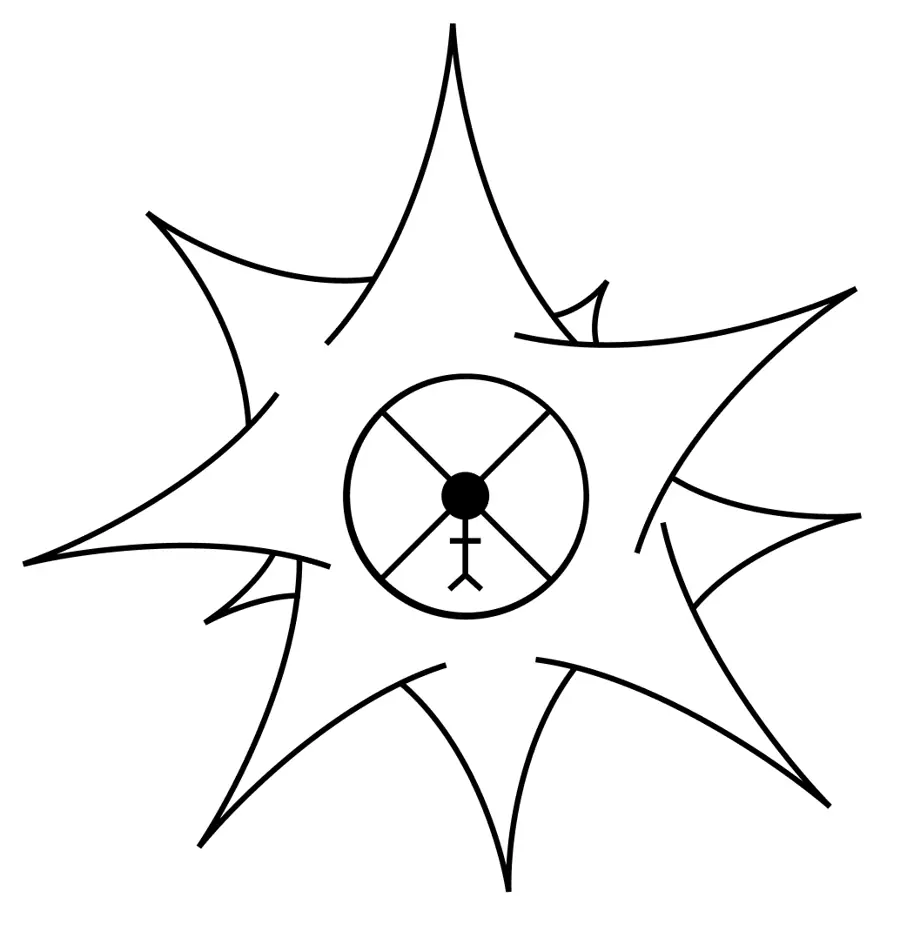
Someone may appear indecisive while carrying obligations we have underestimated. They may accept help and still need a different form of it. They may also be avoiding a truth. Listening does not guarantee they are right. It helps us respond to a real person rather than continually correcting an imagined one.
Care can therefore be active without occupying every available space. Offer a bounded kind of help. Ask whether it is wanted. Let them tell you what you missed. Agree on when to revisit the concern. Leave some room in which their own response can take form.
The point is not to make everyone independent of everyone else. We are dependent creatures. Some people will need substantial support throughout their lives. Their need for help does not make their experience, preferences, or dignity disappear. Participation can include being heard, expressing a preference, or receiving care that respects what matters to them.
Boundaries and shared consequences
The other person’s agency matters, and so does yours. A choice can affect shared money, time, safety, work, or commitments. You are a participant in that situation too.
If you share a household with the person considering a new job, you may need an honest conversation about what expenses you can carry. Respect for their choice does not require an unlimited promise to absorb its consequences.
A boundary should make your own participation clear: what you can offer, what you cannot sustain, and what agreement a shared responsibility needs. It becomes harder to defend when its main purpose is to make the other person’s refusal unbearable.
“I can cover this expense until the end of the month; after that we need another arrangement” can identify a real limit. A threat to withdraw unrelated affection or support until someone obeys uses a different kind of pressure. The language of boundaries does not make every demand fair. Its connection to the actual responsibility still has to be examined.
When protection has to act
Some situations do require intervention before agreement. A small child moving toward traffic cannot be protected by a long discussion at the edge of the road. The urgency and the child’s present capacity change what care requires.
But an urgent reason should remain attached to its actual limits. Stopping an immediate danger does not give someone permanent authority over every later choice. Where a protective role continues, its scope and justification should remain open to review.
The useful questions are concrete: what harm am I trying to prevent? How immediate is it? What responsibility do I actually have? Is a less restrictive response available? Who can question my judgment? What would allow this restriction to lessen?
Returning agency does not always mean withdrawing support. It can mean offering choices within support, changing an arrangement as a person’s capacities change, or making room for another trusted perspective. The amount of help and the respect within it are separate questions.
Letting care receive correction
One uncomfortable test is whether I can tolerate a helpful outcome that I did not direct. If the person finds another way forward, do I feel relief—or mainly resentment that my plan was not chosen?
Neither reaction is a complete verdict on the heart. It is something to notice. My care may have become entangled with needing to be necessary, trusted without question, or recognized as the person who knew best.
For me, this question also belongs before God. Am I willing to serve a good that exceeds my authorship? Can my claim to be doing His will receive correction? A private certainty that can never be questioned may preserve my own will while giving it a sacred name.
A return can begin in a small sentence: “I still have the concern, but I can see that I have been trying to decide this for you. What have I missed?” The apology does not need to erase the risk. It can reopen the relationship in which the risk is being faced.
Before the next intervention, ask:
- What am I protecting here—the person’s good, a shared responsibility, or my need for certainty?
- What have they told me that has actually changed my response?
- Can they disagree without being punished for the disagreement itself?
- Does my help leave them a meaningful place in what happens next?
These questions are for examining our participation. They should not become a new vocabulary for winning an argument.
Care makes room for the person it is trying to protect.
CHAPTER 13
Forgiveness and Permission
Releasing vengeance does not require pretending that harm should continue.
Forgiveness is easily confused with permission because both can involve refusing retaliation. But the two operate at different levels. Forgiveness concerns the relation to the wrong, the wrongdoer, and the debt we are tempted to keep collecting. Permission concerns what actions and conditions we continue to allow.
A person can forgive and still leave. Forgive and still require restitution. Forgive and still tell the truth publicly. Forgive and still create distance. Refusing vengeance is not the same as refusing consequence.
The opposite confusion also occurs: maintaining a boundary is interpreted as hatred. But a boundary can be an attempt to keep Reality visible. If a pattern repeatedly harms, naming the pattern can be more truthful than performing a superficial peace that preserves it.
The Fine Line is context-sensitive because forgiveness itself has multiple dimensions: emotion, intention, action, reconciliation, trust, and relationship. Reconciliation requires conditions that forgiveness alone cannot guarantee. Trust concerns prediction of future reliability and may rebuild slowly even when forgiveness is sincerely given.
| Do not collapse the terms Forgiveness is not permission. Forgiveness is not automatic reconciliation. Forgiveness is not identical to restored trust. |
|---|
PART IV
Will, Power, and Becoming
A human being is not only expressing a self. Through repeated participation, a human being is also forming one.
CHAPTER 14
Desire and Orientation
Wanting something and being governed by it are not the same event.
Humans contain multiple desires at once. Comfort and truth. Pleasure and commitment. Approval and independence. Revenge and mercy. Rest and ambition. The mere presence of a desire does not tell us what the person serves.
Orientation is the higher-order relation that gives some possibilities priority over others. This is why a person can desire an action and refuse it, or dislike an action and still choose it. The Fine Line between desire and orientation protects agency from being reduced to appetite.
But orientation can also be misrepresented. We may say truth is our highest value while arranging every conflict to protect status. We may say family comes first while giving nearly all usable attention to work. This does not automatically prove hypocrisy; constraints and weakness matter. But repeated sacrifice patterns reveal governing structure more reliably than slogans.
The practical question is not only 'What do I want?' but What is deciding among what I want? That question sits close to the historical God Place intuition in the Matrix: every participant seems to have some governing role, whether filled consciously by God, truth, status, self-creation, family, pleasure, ideology, or a shifting network of commitments.
| The line Desire presents a possibility. Orientation gives possibilities rank. Action reveals what became operative in the Moment. |
|---|
CHAPTER 15
Freedom and Impulse
Doing what you want can be the expression of freedom or the evidence that an impulse owns you.
Freedom is often imagined as removal of restraint: I am free when nothing prevents me from doing what I want. But this definition becomes strange when the wanting itself is compulsive, manipulated, addictive, frightened, or socially programmed.
A person who cannot refrain from an impulse is not obviously more free because the impulse originated inside their nervous system. Internal origin is not the same as self-governance. Conversely, restraint is not automatically unfree. A chosen discipline can increase future Action Horizons by building skill, health, trust, or capacity.
The Fine Line therefore runs through the relation between impulse and governing self. Can the person pause? Can they revise? Can they tolerate the discomfort of not obeying the immediate want? Can they act from a commitment that conflicts with appetite? Does the pattern widen or narrow future possibility?
This is one place Nietzsche's self-overcoming becomes interesting without needing to accept his whole moral project. A human being who merely obeys inherited rules is not obviously free, but neither is a human being who merely obeys appetite. Self-overcoming names the possibility that freedom involves becoming capable of governing what presently governs you.
| Freedom is not one-directional Removing external restraint can widen freedom. Developing internal capacity can widen freedom too. |
|---|
CHAPTER 16
Discipline and Compulsion
Repetition becomes dangerous when the practice loses the ability to answer to the purpose that created it.
Discipline and compulsion can look almost identical from outside: strict schedule, sacrifice, discomfort, repetition, refusal of distraction. The Fine Line appears in flexibility, purpose, and control.
Discipline is usually organized toward a valued end and remains revisable by Reality. If injury occurs, training changes. If evidence shows the method fails, the method can be replaced. If the cost exceeds the good, the person can reconsider.
Compulsion begins to detach the repetition from the larger orientation. The act must occur because not doing it becomes intolerable, identity-threatening, or psychologically impossible. The rule starts serving itself. Evidence that should modify the practice is interpreted as a reason to tighten it.
This is not a clinical diagnosis; it is a functional distinction. The key question is whether the participant still possesses meaningful flexibility. Can the routine bend without the self collapsing? Can the purpose judge the practice, or has the practice become the purpose?
| A formation test Discipline uses repetition to build capacity. Compulsion can use the person to preserve repetition. |
|---|
CHAPTER 17
Confidence and Arrogance
Security and superiority can wear the same face.
Confidence is not simply high self-estimation. A confident person may know they are weak in a domain and remain secure because the weakness does not threaten their worth. Arrogance often requires comparison: the self becomes stabilized through being above another.
This is why outward boldness cannot locate the line. A quiet person can be arrogant; a loud person can be secure. The Fine Line concerns relation to truth and to the Other. Can I be corrected without humiliation? Can someone else be excellent without that excellence diminishing me? Can I say 'I do not know'? Can I occupy strength without needing another person beneath it?
True confidence tends to tolerate Reality because the self does not need every fact to be flattering. Arrogance recruits representation to defend rank. This can make arrogance strangely fragile: the stronger the performance of superiority, the more threatening ordinary correction becomes.
| Confidence versus arrogance Confidence can stand. Arrogance often needs someone else to be lower. |
|---|
CHAPTER 18
Courage and Recklessness
Moving toward danger becomes courage only when danger is being borne for something worth the cost.
Courage and recklessness both overcome fear. That is why fearlessness alone cannot define courage. A reckless action may involve genuine bravery at the level of bodily response while remaining foolish at the level of judgment.
Courage requires some relation between risk and good. The person accepts a cost because something matters enough to justify bearing it: truth, protection, rescue, integrity, exploration, responsibility. Recklessness detaches exposure to risk from adequate regard for consequence, capacity, or the people who will inherit the outcome.
The Fine Line also moves with skill. An action that is courageous for one person may be ordinary for another, while an action that is controlled for an expert may be reckless for a novice. The external danger is only one variable; the real Action Horizon and capability of the participant matter.
| Risk is not virtue The moral or existential value of courage comes from what the risk is for, not merely from the fact that fear was defeated. |
|---|
CHAPTER 19
Strength, Power, and Service
Greater capacity can become domination or greater possible responsibility.
Power is the capacity to alter conditions. It can be physical, social, financial, institutional, intellectual, emotional, or relational. Power is not identical to evil; without power, many goods cannot be enacted. But power creates a Fine Line because the ability to serve and the ability to dominate often increase together.
The tempting collapse is greater capacity = greater worth. The Matrix rejects that. A participant can possess more influence in a System without possessing more human value. Capacity changes responsibility and possibility, not ontological worth.
This creates a different interpretation of strength: greater capacity may create greater possible service. In a Moment between two people, one may have more emotional stability, more patience, more knowledge, more freedom, or more ability to absorb cost. The question becomes whether that asymmetry is used to enlarge the other's participation or to make the other submit to the stronger person's will.
This is also where the user's recent intuition about grace-bearing becomes interesting in a theological extension: the person with more room in the Moment may be able to bend further for the good of the other. The neutral principle does not need to call that grace. It can simply say that capacity creates possibilities whose moral meaning depends on orientation.
| Power at the line The same capacity can become domination or stewardship depending on what governs its use. |
|---|
PART V
The Moral Field
Morality requires distinctions, but a moral distinction should not quietly become the total description of Reality.
CHAPTER 20
Good, Evil, and Beyond the Box
The white box can be true. The black box can be true. Reality can still be larger than both.
Picture a defined white box of goodness and a black box of evil. The intuition is not that one of the boxes is fake. The intuition is that the moral field can be real without being the whole field of being.
This helps clarify a recurring attraction to Nietzsche. 'Beyond good and evil' need not be understood as a childish third zone where morality no longer matters. It can be read, for our purposes, as a movement to a level where the Good/Evil distinction itself becomes visible as a frame: Who drew it? What does it capture? What does it exclude? What happens if a life is organized entirely around being accepted into the white region?
The Matrix is broader in scope than a single moral Dichometry because it also depicts subject, body, System, manifestation, representation, possibility, orientation, action, and becoming. But broader scope does not automatically make the Matrix morally superior, nor does it make the moral distinction unreal. The Matrix is simply trying to see more dimensions at once.
A Christian can then make a stronger claim outside the neutral framework: that the Good is not merely a social box but grounded in God. Nietzsche can challenge whether the inherited representation of that Good is actually Reality. The Matrix can host the disagreement without pretending to settle it by diagram.
| The Fine Line To see beyond a moral frame is not necessarily to escape morality. It may be to see the frame as one real dimension inside a larger Reality. |
|---|
CHAPTER 21
Judgment and Reduction
A judgment can be correct and still become unjust when it claims more than it knows.
Judgment is unavoidable. We distinguish safe from dangerous, honest from deceptive, loving from cruel, reliable from unreliable. Refusing all judgment is itself a judgment about judgment.
The Fine Line appears when a judgment of action, pattern, or risk becomes a total ontology of the person. 'That act was cruel' becomes 'you are nothing but cruel.' 'I cannot trust you with this' becomes 'nothing in you is trustworthy.' A useful category becomes a prison.
Reduction is attractive because it simplifies Action Horizons. If the other person is completely known as bad, no curiosity is required. If I am completely known as victim, no responsibility is required. If a group is completely known by one trait, no encounter is required. Complexity disappears along with correction.
The alternative is not moral vagueness. It is layered judgment: name what is known at the level at which it is known. Judge the act as an act, the pattern as a pattern, the risk as a risk, and the person as a person whose full Reality exceeds the available evidence.
| Precision is morally useful A smaller true judgment can be more just than a larger dramatic judgment that exceeds what the evidence supports. |
|---|
CHAPTER 22
Rules and Formation
A rule asks whether an act crossed a line. Formation asks what repeated participation is making easier to become.
Rules are powerful because they compress moral learning. Do not lie. Do not steal. Keep promises. Protect the vulnerable. A person does not need to reconstruct moral philosophy from zero in every Moment.
But rule-following can become detached from formation. A person can technically satisfy a rule while cultivating the opposite spirit: telling a literal truth to humiliate, obeying publicly to build moral status, refusing an act only because of fear of punishment.
Formation adds a temporal dimension. What kind of participant does this pattern make me more capable of being? What kind of relationship does it sediment? What kind of System does it normalize? The moral object is no longer only the isolated act but the becoming that repeated acts help produce.
The Fine Line here is not rules versus no rules. It is rules as guides toward good participation versus rules as self-sufficient moral bookkeeping. The rule can remain true while the person learns to see the good the rule protects.
| Act and trajectory Morality can ask both: "Was this act right?" and "What kind of becoming does this pattern serve?" |
|---|
CHAPTER 23
Responsibility Without Sovereignty
Finite responsibility sits between the fantasy of total control and the escape of total helplessness.
Human beings inherit conditions they did not choose: body, history, family, language, institutions, trauma, opportunity, other people's actions. We also act within those conditions in ways that can alter what comes next. Moral life therefore occupies a Fine Line between sovereignty and determinism.
The sovereign fantasy says: I am fully the author of myself and my outcomes. The helpless fantasy says: because I did not author the conditions, my participation does not matter. Both erase part of the recursive picture.
The Matrix offers a middle grammar: inherit -> encounter -> participate -> inherit anew. Responsibility attaches to the capacity actually available in the Moment, not to omnipotent control over the System. This is why two people can bear different responsibility in superficially similar situations: their knowledge, power, options, constraints, and capacities differ.
Responsibility without sovereignty can be demanding because it removes two comforts. You cannot claim credit for everything good that flows through you, and you cannot dismiss every consequence because the world was already complicated.
| A stewardship formulation You are not responsible for being God over the whole field. You are responsible, to some degree, for what you do with the capacity genuinely available to you in the field you have inherited. |
|---|
The Position an Encounter Creates
I was waiting to enter the highway. Cars had formed a line, although another lane remained beside us until the two became one. Near the merge, I saw a driver coming forward along that lane. It felt as though he was moving ahead of everyone who had waited. I pulled out to stop him getting in front of me. He stopped and went behind me.
The movement was brief, but the experience within me continued. I became jittery and anxious. What was he thinking about me? Would he do something intense? I had been attending to his movement, then to my own response, and then to his possible response to me. Much of what now occupied my attention had not actually happened. It belonged to the possibilities I was imagining.
I described the experience as feeling pushed into a kind of God position or judgmental position. I did not mean that I had acquired divine authority. I was trying to name the peculiar sense of occupying a role in relation to another person: I had judged a movement and intervened in it, and now there were consequences and possible expectations to carry. I chose the movement of the car. I did not separately choose every feeling that accompanied the position it created.
One possible reading concerns the movement from discerning that something seems unfair to making myself responsible for preventing it. Those are distinguishable acts, even when they happen close together. This may illuminate part of the encounter. It does not establish that a wish to control was my complete motive, or that every later question about the experience is an attempt to justify myself.
Another question concerns the presence of the other subject within my attention. I could imagine that he regarded me as justified, petty, threatening, or something else. I could not know which account, if any, was his. The concern I felt about his response was real, while the picture of his thoughts remained uncertain. Considering his perspective could disclose something about my action; inventing a perspective and treating it as known could also obscure him.
What, then, was I sensitive to? Possible concerns include danger, perceived unfairness, being seen by another person, and the unexpected sense of having assumed a role. I do not yet know how to divide the experience among them. The jitteriness cannot settle the moral question or identify what God was doing. The event gives the inquiry a concrete beginning while leaving its explanation unfinished.
There is a practical limit that remains clear enough to guide driving. Pulling out to obstruct another driver can create danger. A concern about fairness does not make that movement safe. I also did not know his intention or how he understood the available lane. Predictable driving and room to merge matter even while the philosophical questions remain open.
The inquiry then turns toward the sensitivity itself. Why does this change of position interest me? Why do I want to describe its nuances and keep returning to it? Here I need to distinguish the immediate event from the love for God that motivates my examination of it. Calling the whole inquiry a need to be properly positioned would settle its meaning too quickly.
For now, I want to preserve the encounter closely enough that later experience can correct or deepen its interpretation. Responsibility without sovereignty includes owning the movement I made while admitting how much of the other person, my own reaction, and the shared Moment remained beyond my clear understanding. The account can stay open without requiring the next responsible action to wait.
Read the clarification about contemplative distance · Continue in God’s Grace
CHAPTER 24
Capacity and Worth
Differences in ability create asymmetries of possibility, not a ranking of personhood.
Human beings differ radically in strength, intelligence, wealth, stability, health, knowledge, beauty, status, skill, courage, and social power. Any realistic framework has to see those asymmetries. A moral framework becomes dangerous when it converts them into worth.
The Fine Line is especially relevant in systems that reward capacity. The person with more productive output receives more money; the person with greater social intelligence receives more influence; the stronger athlete receives more status. Those may be functional arrangements, but they can quietly become ontological stories: therefore this person matters more.
Separating capacity from worth changes how strength is interpreted. A stronger participant may have a wider Action Horizon and therefore more options for service, restraint, protection, or repair. Greater capacity can increase moral responsibility without increasing human value.
This distinction also protects the temporarily weak. A person in grief, illness, fear, exhaustion, infancy, or dependence is not less of a Subject because their present capacity is small. A System that recognizes only output will systematically misread human worth.
| Do not collapse function into value What a person can presently do and what a person is worth are not the same variable. |
|---|
PART VI
The Matrix at the Line
The Matrix is useful partly because it gives Fine Lines places to live - and dangerous because the Matrix itself has Fine Lines.
CHAPTER 25
Real Possibility and Imagined Possibility
The line between "I cannot" and "I cannot see how" changes the kind of help that is needed.
One of the clearest Matrix distinctions is between the real Action Horizon and the represented Action Horizon. What you can actually do and what you think you can do are overlapping but non-identical sets.
This creates several Fine Lines. A structural constraint is different from a representational constraint. If the door is literally locked, encouragement cannot open it. If the door is unlocked but the person believes it is locked, structural intervention may be unnecessary; information or demonstration may be enough. If the person sees the open door but cannot choose it because another orientation dominates, the problem is neither purely structural nor informational.
These distinctions matter because interventions can become cruel when they target the wrong level. Telling a structurally trapped person to 'believe in themselves' turns a real constraint into a character judgment. Restructuring a whole environment when the only problem is missing information wastes power. Moralizing a lack of action before asking whether the action is genuinely feasible can confuse inability with unwillingness.
| Locate the line before prescribing Is the possibility absent, unseen, misunderstood, or rejected? Similar outcomes can arise from different constraints. |
|---|
CHAPTER 26
The Map and Reality
Every representation that teaches non-collapse is itself vulnerable to becoming the thing it warns against.
The Existential Matrix says that Reality exceeds finite representation. That principle must apply to the Matrix itself or the framework becomes self-exempting.
This produces a beautiful and dangerous Fine Line. A map can improve contact with Reality by naming distinctions that would otherwise collapse. But the richer the map becomes, the easier it becomes to inhabit the map as though mastery of the vocabulary were mastery of existence.
The warning is practical. Someone can learn Subject, Moment, System, Four Affections, manifestation, representation, orientation, Action Horizon, Expose, sedimentation, and Fine Lines - and still fail to listen to the person in front of them. The map may be excellent while the participant is absent.
The line is crossed when preserving the model becomes more important than allowing Reality to correct it. If a lived experience does not fit a category, the category should become vulnerable. If two distinctions repeatedly add no different value, they should collapse. The Matrix should become smaller when evidence makes smaller better.
| The self-applying rule Matrix != Reality. A theory that cannot survive that sentence should not be trusted with the rest of Reality. |
|---|
CHAPTER 27
A Framework and a Worldview
A lens can become a world when the participant forgets that it is a lens.
The Matrix can begin to feel religious because it supplies a language for being, seeing, orientation, action, morality, and becoming. Anything that broad can become a worldview by psychological use even if it was not designed as one.
The Fine Line between framework and worldview concerns authority. A framework says: this distinction may help you see. A worldview says: this is the basic structure through which you should interpret what is. The first remains subordinate to Reality; the second increasingly governs admission to Reality.
There is nothing inherently wrong with having a worldview. Human beings cannot approach every Moment without background commitments. The danger is hidden totalization: a framework begins as a tool and quietly becomes the standard by which all other experience is allowed to exist.
The Matrix should therefore maintain an exit. A reader should be able to close the book and live without mentally maintaining it. If the framework is useful, some distinctions may remain implicit and improve perception. If it demands constant cognitive loyalty, it has crossed into a different kind of project.
| A safeguard A good map can become background skill. It should not demand to become the foreground object of life. |
|---|
CHAPTER 28
Fine Lines as a Method
The point is not to multiply distinctions forever. It is to preserve the distinctions whose collapse costs something.
Fine Lines can become a method for thinking. Start with two things that are often treated as identical or as simple opposites. Then ask what exactly changes between them and whether preserving the difference changes prediction, diagnosis, intervention, moral judgment, or understanding.
A useful process is: differentiate -> relate -> test -> retain or collapse. First, draw the distinction provisionally. Second, describe how the two sides relate so they do not become isolated boxes. Third, test whether the distinction earns complexity. Fourth, keep it only if something consequential is lost when the terms are merged.
This prevents Fine Lines from becoming a machine for producing endless vocabulary. The goal is not to discover that every pair of words hides a profound boundary. Many distinctions are verbal noise. A line earns its place when it helps us act, understand, diagnose, protect, create, or correct more accurately.
The method also asks whether the boundary itself is being weaponized. People can draw lines to exclude, dominate, or protect identity. 'Us versus them' is a Dichometry too. The existence of a line does not certify the wisdom of the line. Fine Lines studies boundaries; it does not worship them.
| Minimum sufficient distinction Differentiate where collapse loses consequential structure. Collapse where the distinction adds none. |
|---|
CHAPTER 29
Returning to Reality
The final Fine Line is between understanding the line and stepping back into the Moment where the line actually matters.
A book about Fine Lines can become exactly the problem it describes. It can make the reader exquisitely sensitive to nuance while increasingly hesitant to act. Every sentence can acquire ten qualifications. Every judgment can be suspended because another perspective exists. Every ordinary Moment can become a philosophical object.
That is not the aim. Nuance should make participation more accurate, not impossible. The line between patience and avoidance should help someone recognize when waiting is no longer serving love. The line between empathy and projection should make listening more correctable. The line between care and control should preserve another person's agency. The line between discipline and compulsion should make a practice more responsive to Reality.
The deepest line may therefore be the same one that began this book: seeing versus doing. We need enough seeing to avoid blindness and enough doing to avoid disappearing into representation.
The book ends where the Moment begins again. Someone is in front of you. Your body is somewhere. Something is actually possible. You do not know everything. You may still have to decide. The distinction does not remove the risk of participation. It only helps you carry the risk with slightly better sight.
| Close the book See the line when it matters. Name what changes. Keep the distinction as small as truth allows. Then return to Reality and participate. |
|---|
Appendix - A Fine-Line Diagnostic
When two nearby states, actions, or values are being confused, use the following questions as a practical diagnostic.
1. What are the two things being confused? Name them provisionally without pretending the labels are final.
2. What stays the same across the line? Similarity explains why the confusion is plausible.
3. What changes across the line? Look for function, flexibility, orientation, power, truth, relation, consequence, or formation.
4. What kind of line is it? Functional, decisional, normative, or a mixture?
5. Which variables move the line? Context should be specified, not invoked vaguely.
6. Does the distinction change action? Would preserving it alter diagnosis, intervention, prediction, moral judgment, or understanding?
7. Can the line be corrected by Reality? What evidence would show that it was drawn badly?
8. Is the boundary becoming an identity weapon? Does the label reduce a person or group to one side?
9. Is reflection still serving participation? Or has analyzing the line become a way not to act?
10. What is the smallest distinction that preserves what matters? Keep no more complexity than the Moment earns.
Selected Fine Lines in This Book
| Side A | Side B | Useful question |
|---|---|---|
| Seeing | Living | Does reflection return to participation? |
| Awareness | Self-surveillance | Where does attention return? |
| Knowing | Formation | Did capacity change? |
| Person | Representation of person | Can the model be corrected by the person? |
| Empathy | Projection | Is resonance treated as proof? |
| Love | Possession | Can truthful difference exist? |
| Care | Control | Is agency part of the good? |
| Forgiveness | Permission | Can consequence remain without vengeance? |
| Desire | Orientation | What governs among wants? |
| Freedom | Impulse | Can the participant revise or refrain? |
| Discipline | Compulsion | Can purpose still judge the practice? |
| Confidence | Arrogance | Does strength require someone beneath it? |
| Courage | Recklessness | What good justifies the risk? |
| Power | Domination | Does capacity enlarge or erase others participation? |
| Judgment | Reduction | Does a true claim become a total person? |
| Rule | Formation | What does repeated participation make easier? |
| Responsibility | Sovereignty | What capacity is actually available? |
| Capacity | Worth | Is function being mistaken for human value? |
| Real Action Horizon | Represented Action Horizon | Is the option absent or unseen? |
| Map | Reality | Can Reality revise the map? |
| Framework | Worldview | Has the tool become the authority? |
Working Note
This is a populated working book, not a frozen doctrine. The Fine Lines project should remain open to new intuitions, counterexamples, and revisions. New lines can be added; old lines can be merged; some boundaries may turn out to be badly drawn. The point is not to protect the vocabulary. The point is to see transitions in human experience that matter enough to deserve careful distinction.
Future expansions can develop spiritual Fine Lines, relational Fine Lines, aesthetics, politics, technology, sexuality, parenting, institutions, altered states, creativity, and the relationship between God, the Good, and finite moral representation. Those expansions should be allowed to challenge the present architecture rather than merely fit inside it.